Clinical aromatherapy: a complete guide from a holistic therapist in Dubai
Clinical aromatherapy is the therapeutic, dosed use of pure essential oils — extracted by steam distillation or cold pressing from plants, flowers, leaves, barks and resins — to accompany specific physical, emotional and energetic processes. Unlike everyday aromatherapy (scenting a room with something pleasant), clinical aromatherapy is based on the real chemistry of each oil, its absorption pathways and its measurable effect on the nervous, hormonal and immune systems. In this guide, drawn from my daily practice as a holistic therapist in Dubai, I explain how it works, which oils I use and how I integrate them into my sessions in Arabian Ranches.
The essentials of clinical aromatherapy
Clinical aromatherapy uses pure essential oils, properly dosed and chosen for their chemistry,
to accompany concrete issues: stress, insomnia, anxiety, chronic pain, hormonal or digestive
imbalances. It acts via the sense of smell (limbic system) and the skin (transdermal absorption),
with measurable effects on the nervous system.
- What it is: the dosed therapeutic use of pure essential oils (no synthetic blends)
- How it works: olfactory pathway (limbic system) + dermal pathway (absorption)
- What it helps: anxiety, insomnia, chronic pain, menstrual cycle, immune support
- Difference from common aromatherapy: dosage, purity, indication tailored to each person
- Session in Dubai: integrated into Reiki and holistic massage, from AED 300 at Rosana Holistic Studio
- Safety: requires training; misuse can irritate skin or interact with medication
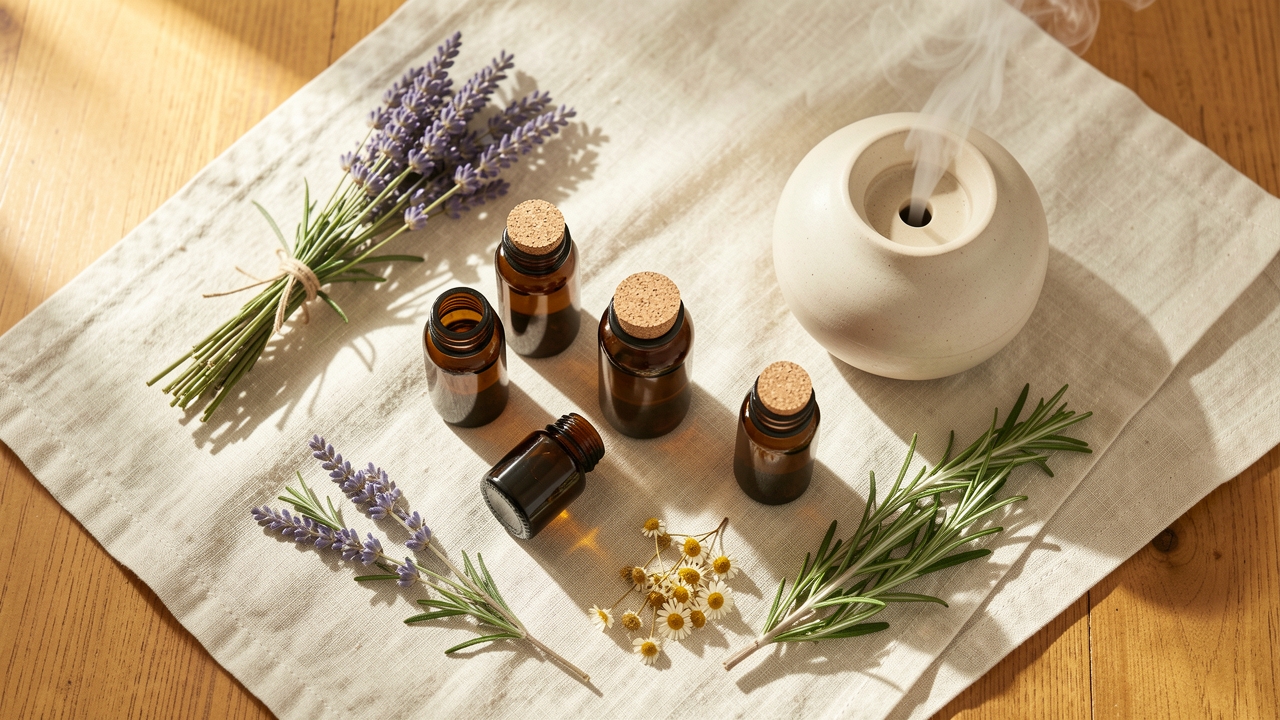
Some of the essential oils I use daily in consultation: lavender, sandalwood, rose geranium, Roman chamomile and bergamot.
What exactly is clinical aromatherapy?
The word aromatherapy was coined in 1937 by the French chemist René-Maurice Gattefossé, after he burned his hand in a laboratory accident and discovered — almost by chance — that lavender applied directly accelerated healing and left no scar. From there, doctors and nurses such as Jean Valnet (a military surgeon) and Marguerite Maury (a biochemist) laid the foundations of what we now call clinical aromatherapy: the precise, dosed and reasoned use of essential oils to accompany therapeutic processes.
The difference from common aromatherapy (the decorative diffuser with any old oil in it) matters:
- Common aromatherapy: the goal is a pleasant aroma. Oil quality isn’t critical.
- Clinical aromatherapy: each oil is chosen for its chemotype (exact chemical profile), dosed like a natural medicine, and applied based on the specific indication for each person.
In clinical aromatherapy an oil isn’t picked because it smells nice, but for which molecules it contains and what effect we are looking for. The same plant can have very different chemical profiles depending on where and how it was grown — and those details completely change its therapeutic use.
Why purity matters
Today around 90% of the “essential oils” sold in the mass market are synthetic fragrances, adulterated blends or chemically-solvent extracts. They smell pleasant, but they hold no therapeutic value — and sometimes they are counterproductive.
A therapeutic-grade essential oil should be:
- 100% pure (no dilutions or carrier-oil blends)
- Extracted by steam distillation or cold pressing (no chemical solvents)
- Traceable: batch, country of origin, distillation date
- Backed by a gas chromatography certificate of analysis verifying its chemical composition
That’s what I use in consultation. It isn’t the cheapest option, but it is the only thing that justifies the name “clinical aromatherapy”.
How do essential oils act on the body?
Essential oils have two main entry routes into the body, and understanding each explains why clinical aromatherapy works where it works.
1. Olfactory pathway: the road to the limbic system
When you inhale an essential oil, its molecules travel through the nose and activate olfactory receptors that send signals directly to the limbic system — the area of the brain that regulates emotion, memory, heart rate and stress response.
This is the only sensory pathway that doesn’t pass through the rational filter of the cortex: smell reaches the emotional brain before conscious thought processes it. That’s why a single aroma can bring back an intact childhood memory, or calm an anxiety attack within seconds.
In consultation I use this constantly: a conscious breath with lavender or bergamot at the start of a session activates the parasympathetic system (the “rest mode”) in less than a minute.
2. Transdermal pathway: absorption through the skin
The molecules in essential oils are lipophilic (fat-soluble) and small enough to cross the skin and enter the bloodstream. That’s why a properly diluted aromatic massage isn’t just pleasant — it is a real route of administration for plant-based active compounds.
The areas of highest absorption are the soles of the feet, wrists, neck and lower back. What can feel like “massage magic” is, in reality, plant chemistry entering the bloodstream and reaching target organs.
Important: essential oils should never be applied neat on the skin (with very few exceptions). They are always diluted in a carrier vegetable oil (sweet almond, jojoba, sesame) at concentrations between 1% and 5% depending on the case. Applying a wrongly chosen neat oil can cause chemical burns, permanent sensitisation or systemic reactions.
The oils I use most in consultation
Every case asks for its own blend. But there is a group of oils that appear again and again in my Dubai consultation because they address the most common situations I see:
- Fine lavender (Lavandula angustifolia): the most versatile oil in the aromatic kit. Calms the nervous system, helps sleep, soothes the skin, balances. It’s the first oil I recommend having at home.
- Bergamot (Citrus bergamia): a very powerful natural anxiolytic. Lifts the mood without over-stimulating. Especially useful in soft grief, emotional dips or anxiety crises.
- Roman chamomile (Anthemis nobilis): for intense emotions, irritability, restless children. One of the most expensive on the market, but its effect on the nervous system has no equivalent.
- Rose geranium (Pelargonium asperum): the quintessential hormonal balancer. I use it often with clients in perimenopause or with irregular menstrual cycles.
- Sandalwood (Santalum album): a deep, grounding aroma. Ideal for meditation, spiritual anxiety, the feeling of disconnection.
- Peppermint (Mentha × piperita): for tension headaches, mental fatigue, digestive issues. Very potent — always in small doses.
- Radiata eucalyptus (Eucalyptus radiata): the gentlest of the eucalyptus oils. For colds, congestion, respiratory support. Safe even for children over 3.
- Frankincense (Boswellia carterii): an ancestral, deeply spiritual oil. I use it at the close of Reiki sessions to integrate the energetic work.
- Ylang ylang (Cananga odorata): balances blood pressure, calms the nervous system, opens the heart chakra.
This is just a small part. I keep around 40 oils in rotation in my cabinet, because each body asks for its own specific chemistry.
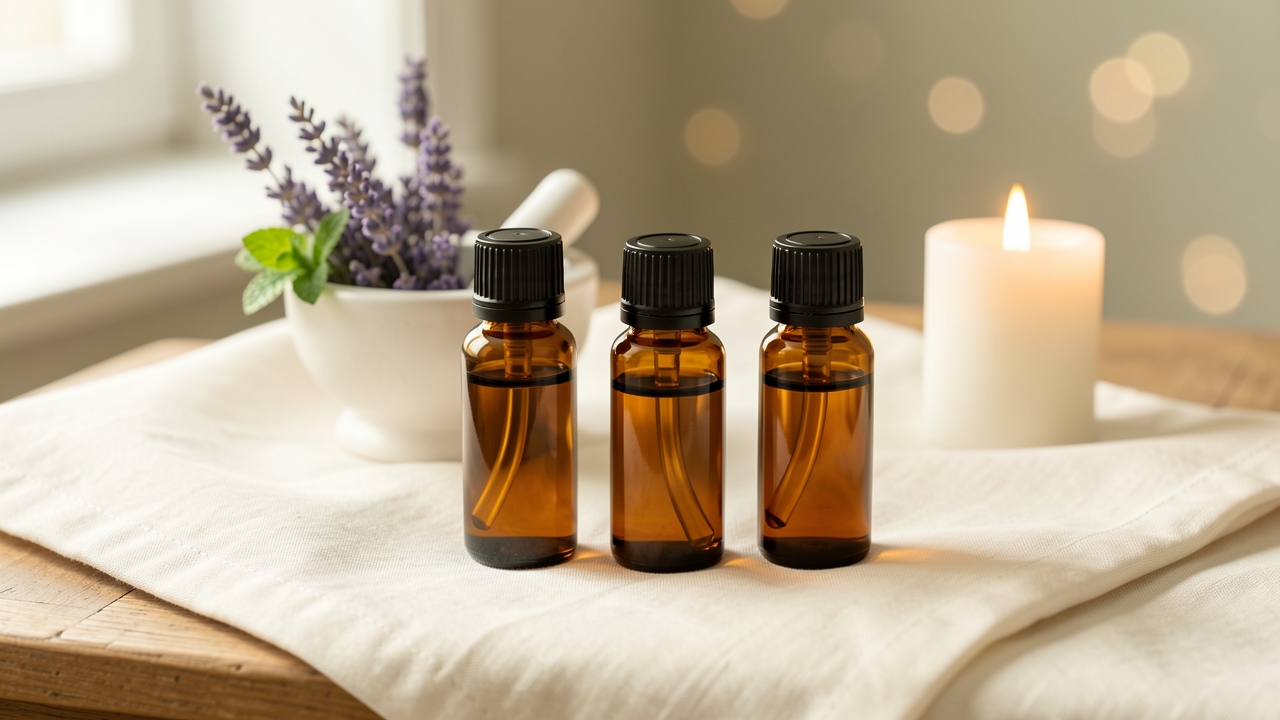
Some of my personalised formulas: each bottle is a unique blend made for a specific client, based on what her body is asking for in that moment.
How I integrate aromatherapy into my sessions
In my studio in Arabian Ranches, aromatherapy isn’t a separate service — it is another layer present in almost all my sessions. This is how I integrate it:
- Before the session: I ask how you arrive, what you want to work on. From there I choose the oil or blend that best supports that intention. I never use a default oil — it is decided that day.
- Diffusion during the session: I diffuse the chosen oil in a ceramic or ultrasonic diffuser, at a gentle concentration. The aroma wraps the space without saturating it.
- Diluted topical application: if the case calls for it, I prepare a specific blend in a carrier oil and apply it to strategic points (wrists, soles of the feet, solar plexus) or integrate it into the holistic massage or lymphatic drainage.
- Tibetan bowl and aroma: the sound of the bowl at the opening and closing of the session, combined with the chosen aroma, anchors the effect in sensory memory. Many clients go home and just smelling the blend brings back the calm state of the session.
- Formula for home: when a process needs continuity, I prepare a personalised roll-on that the client takes with her. It’s a way of sustaining the work between sessions.
Book your first session here — new clients receive 10% off their first session.
Which issues does clinical aromatherapy support well?
After a decade in Dubai, these are the processes where I see the most consistent results:
Nervous system and emotions
- Generalised anxiety and panic attacks: lavender, bergamot, ylang ylang
- Insomnia and difficulty falling asleep: lavender, mandarin, Roman chamomile
- Chronic stress and burnout: pine, fir, vetiver, sandalwood
- Soft emotional dips and sadness: bergamot, sweet orange, frankincense
Physical body
- Tension headaches and migraines: peppermint, lavender
- Muscle tension and chronic pain: wintergreen, lemon eucalyptus, camphor rosemary
- Stress-based digestive issues: peppermint, ginger, exotic basil
- Colds, congestion, sinusitis: radiata eucalyptus, ravintsara, niaouli
Female hormonal system
- Irregular or painful menstrual cycle: rose geranium, clary sage, Roman chamomile
- Premenstrual syndrome: rose geranium, ylang ylang, frankincense
- Perimenopause and menopause: rose geranium, clary sage, cypress
Immune system
- Seasonal support and infection prevention: tea tree, ravintsara, oregano (with caution)
When it isn’t the first choice: acute medical processes, severe allergies, pregnancy (many oils are contraindicated), children under 3. I always make clear when the case calls for conventional medicine first.
Aromatherapy alongside other therapies
Clinical aromatherapy multiplies its effect when combined with other holistic tools. In my consultation it is commonly blended with:
- Reiki: the chosen aroma reinforces the energetic work on specific chakras. For example, sandalwood at the crown chakra, rose geranium at the heart.
- Holistic massage: one of the most powerful combinations. The right pressure + the right plant chemistry = a deep shift in the nervous system.
- Manual lymphatic drainage: oils with decongestive effects (cypress, mastic, helichrysum) enhance work on lymphatic circulation.
- Bach Flower remedies: aromatherapy and Bach Flowers complement each other perfectly — aromatherapy works the chemical dimension, the Flowers work the vibrational one. Together they offer a very complete approach.
Safety: what you need to know before using essential oils
Clinical aromatherapy is very safe when done properly. But there are basic rules often broken on social media that are worth being clear about:
- Never apply neat (with the rare exception of lavender and tea tree in very specific situations, and only if you know your sensitivity).
- Always dilute in a carrier vegetable oil (almond, jojoba, sesame) between 1% and 5% depending on the case.
- Tolerance test before first use: one drop diluted in the crook of the elbow, wait 24h.
- Pregnancy and breastfeeding: the vast majority of essential oils are contraindicated during the first 3 months of pregnancy. Always consult a trained professional before using any essential oil in those stages.
- Children under 3: aromatherapy is limited and requires specific training. Don’t improvise.
- Photosensitising oils (citrus oils like bergamot, lemon, orange): do not apply to skin exposed to the sun within the following 12 hours — real risk of permanent marks.
- Medication: some oils interact with anticoagulants, antihypertensives and other drugs. If you take chronic medication, check first.
My rule in consultation: if I don’t know, I don’t apply. And if I have a reasonable doubt about compatibility with your medical situation, I verify first and we decide together.
Frequently asked questions about clinical aromatherapy
Is clinical aromatherapy the same as common aromatherapy?
No. Common aromatherapy seeks a pleasant aroma; clinical aromatherapy seeks a measurable therapeutic effect. The difference lies in the purity of the oil, the dosage, and the specific indication for each person.
How long does it take to feel the effects of an essential oil?
Depends on the oil and the desired effect. By inhalation, effects on the nervous system are immediate (seconds to minutes): a conscious breath of lavender slows the heart rate in seconds. By skin application, systemic effects appear between 15 and 30 minutes. For chronic processes (hormonal, immune), sustained use over several weeks is required.
Can I diffuse essential oils if I have pets?
With caution. Cats are especially sensitive because they lack a liver enzyme to metabolise certain molecules (phenols, monoterpenes). Avoid oils such as tea tree, eucalyptus, peppermint or cinnamon near a cat. For dogs the list of tolerated oils is wider, but always with intermittent diffusion, ventilated spaces, and never neat oil on the animal.
Which is the most important essential oil to start with?
If I could only choose one, it would be fine lavender (Lavandula angustifolia). It is the most versatile, the safest, the one with the best cost-benefit ratio. It works for sleep, for calming the skin, for lowering anxiety, for accompanying soft grief. It’s the first oil I recommend having at home.
Is “essential oil” the same as “aromatic oil” or “fragrance”?
No. Only pure essential oil has therapeutic value. “Aromatic oils” or “fragrances” are usually synthetic blends that reproduce the smell but don’t contain the plant’s active compounds. For clinical aromatherapy, only certified essential oils are valid.
← Back to blog · Book a session · What is Reiki? · The 7 chakras