Bach Flower remedies: what they are, how they work and a guide from a therapist in Dubai
Bach Flower remedies are a complete therapeutic system of 38 flower essences created by the English physician Edward Bach between 1928 and 1936, designed to work on emotional and mental states — fear, anxiety, grief, despondency, indecision, intolerance, dependency, exhaustion. They don’t act on the physical or chemical level but on the vibrational one: they help rebalance the underlying emotion that is sustaining the discomfort. In this guide, drawn from my daily practice as a holistic therapist in Dubai, I explain what they are, how they are prescribed and how I integrate them into my studio in Arabian Ranches.
The essentials of Bach Flower remedies
Bach Flower remedies are 38 flower essences that act on specific emotional and mental states.
They are taken in drops, over several weeks, and are chosen based on what you are living
emotionally — not on the physical symptom. They are safe, compatible with any medication
and suitable for all ages, including children and pregnant women.
- What they are: 38 vibrational flower essences for emotional and mental states
- Creator: Dr. Edward Bach, English physician, between 1928 and 1936
- How they are taken: 4 drops, 4 times a day, under the tongue or in water
- What they help: anxiety, grief, fears, indecision, transitions, relationship conflicts
- Session in Dubai: consultation + personalised bottle from AED 250 at Rosana Holistic Studio
- Safety: compatible with medication, safe in children, pregnancy and breastfeeding
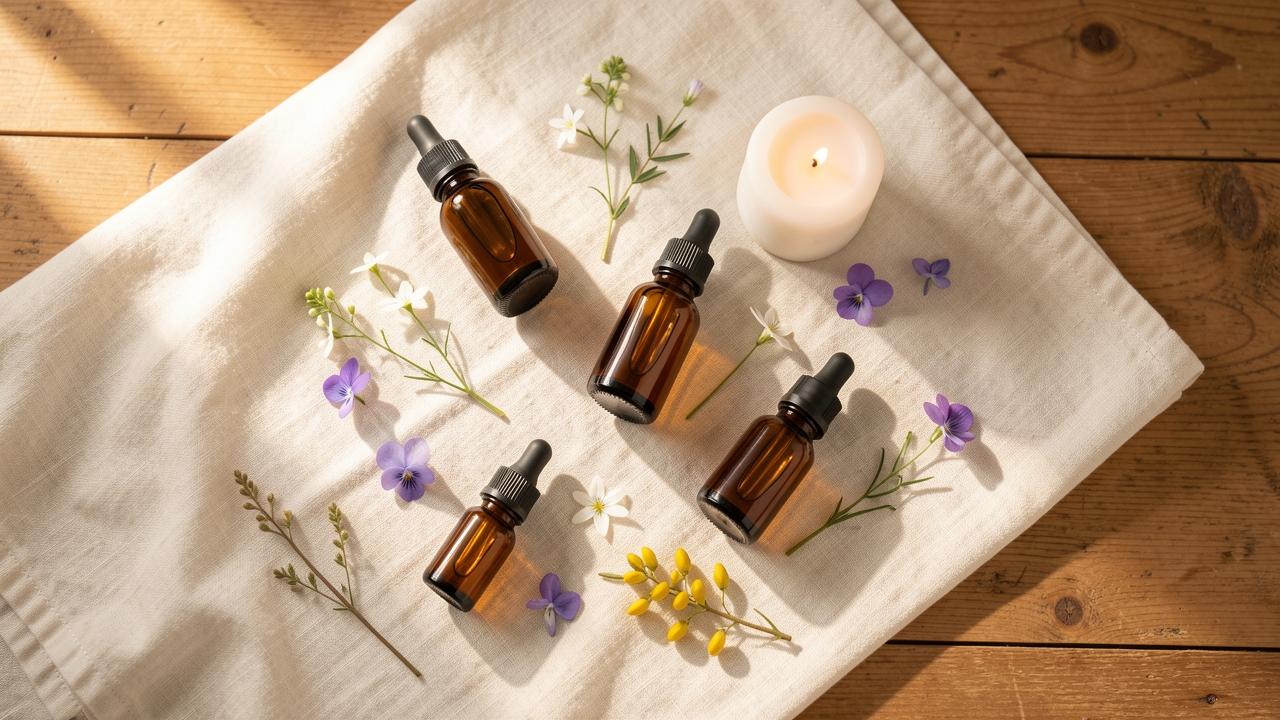
Some of the flower essences I use in consultation: Rescue Remedy, Mimulus, Star of Bethlehem, Walnut and Mustard, among others.
Who was Edward Bach and why did he create this system?
Dr. Edward Bach (1886-1936) was a brilliant English physician, trained in bacteriology at University College Hospital in London and recognised in his time for his work in homeopathy. At 40, after years observing that his patients’ mood seemed to directly influence the course of their physical illnesses, he left his successful Harley Street practice and moved to the Welsh countryside to devote himself entirely to the search for a therapeutic system that addressed the emotional cause of discomfort, not just the symptoms.
Between 1928 and 1936, walking through the woods of Wales and England at dawn, Bach identified and developed 38 flower essences, each one corresponding to a specific emotional or mental state. He died in 1936, aged 50, leaving a complete, finished, free and open system for anyone to use. His philosophy was radical for his time: “the remedy must be within reach of all”.
Today, almost 90 years later, Bach Flower remedies are used in clinics, hospitals and holistic centres around the world, and they are one of the best documented and most widespread vibrational therapy systems.
The 38 flowers + Rescue Remedy
The 38 essences are organised into 7 groups according to the emotional state they address:
- Fears — Mimulus, Rock Rose, Cherry Plum, Aspen, Red Chestnut
- Uncertainty — Cerato, Scleranthus, Gentian, Gorse, Hornbeam, Wild Oat
- Lack of interest in the present — Clematis, Honeysuckle, Wild Rose, Olive, White Chestnut, Mustard, Chestnut Bud
- Loneliness — Water Violet, Impatiens, Heather
- Oversensitivity to influences and ideas — Agrimony, Centaury, Walnut, Holly
- Despondency and despair — Larch, Pine, Elm, Sweet Chestnut, Star of Bethlehem, Willow, Oak, Crab Apple
- Excessive concern for others — Chicory, Vervain, Vine, Beech, Rock Water
Added to these 38 is the Rescue Remedy — the only “combined formula” created by Bach himself. It is a blend of five essences (Star of Bethlehem, Rock Rose, Cherry Plum, Impatiens and Clematis) designed for acute emotional crises: unexpected news, panic attacks, accidents, exams, flights. I always recommend keeping one at home and another in your bag.
How do Bach Flower remedies really work?
Here I need to be honest: Bach Flower remedies don’t work at a chemical level. They contain no pharmacologically significant active compounds, and they are not prescribed for the physical symptom — they are prescribed for the emotional or mental state behind the discomfort.
The system rests on a central idea: the underlying emotion sustained over time ends up manifesting in the body. If you live for months or years from fear, guilt, resentment or indecision, that emotional load translates into physical symptoms (insomnia, digestive issues, chronic pain, low immunity).
Bach Flower remedies work on the vibrational plane: each essence carries the “energetic information” of the flower it comes from, and helps the emotional system find its natural balance again. They don’t suppress the emotion or change it artificially. What they do is something subtler and deeper: they help you transit the emotion with greater clarity and unfreeze what was stuck.
And what does science say?
With the same honesty as elsewhere in this blog: the scientific evidence on Bach Flower remedies is limited, and in double-blind trials the effects don’t always exceed placebo. That is true.
But it is also true that:
- They have been in continuous use for over 90 years in thousands of clinics around the world
- In observable clinical practice, the emotional changes seen are real and replicable
- Their safety profile is excellent: zero adverse effects, zero significant medication interactions
- They work very well in children and animals, where the placebo effect is debatable
My personal position, after a decade in consultation: I don’t need science to fully explain the mechanism to recognise that what I see in my clients works. And at the same time, I never present them as a substitute for psychological or medical care when that is what’s needed.
How Bach Flower remedies are prescribed: why the consultation matters
This is the part most people don’t know: Bach Flower remedies are not chosen by symptom. There is no “flower for headache” or “flower for digestion”. They are chosen based on the emotional state the person is living in that specific moment of their life.
That’s why a Bach Flower consultation lasts between 60 and 90 minutes, and feels more like a deep conversation than a “prescription”. In my consultation, the process goes like this:
- Open conversation about your current moment: how you feel, what is weighing on you, what patterns repeat, which underlying emotion shows up most often. There is no fixed questionnaire — each conversation finds its own path.
- Identification of the active emotional states: from what you share, I identify which of the 38 states Bach described are present right now. Usually between 3 and 7 essences per formula.
- Preparing the personalised bottle: I prepare your formula in a 30 ml bottle. It lasts between 3 and 4 weeks, which is the average time a sustained emotional shift takes to settle.
- Clear instructions: 4 drops, 4 times a day, under the tongue or in a glass of water. Before meals and before sleep is most effective. Regularity matters more than quantity.
- Follow-up at 4 weeks: we review the bottle. Sometimes the formula needs adjusting because the underlying emotions have shifted — and that is exactly what we are looking for. Sometimes we continue with the same formula for another round.
Book your first consultation here — new clients receive 10% off.
What does this work especially well for?
After a decade in Dubai, these are the cases where Bach Flower remedies most clearly make a difference:
Life transitions
- International relocation (very common in Dubai — Walnut is almost a default)
- Career change
- Recent motherhood (including post-partum emotional shifts)
- Separations, divorces, the end of life stages
- Adolescence (deep identity changes)
- Perimenopause and menopause
Sustained emotional states
- Background unresolved anxiety (Mimulus, Aspen, White Chestnut)
- Unprocessed grief (Star of Bethlehem)
- Chronic guilt (Pine)
- Resentment, bitterness (Willow, Holly)
- Paralysing indecision (Scleranthus, Cerato)
- Mental exhaustion from excessive responsibility (Elm, Oak)
Children and teenagers
Bach Flowers are especially useful in children because they have no taste, no side effects and fully respect their process. Typical cases:
- Nighttime fears (Mimulus, Rock Rose, Aspen)
- Arrival of a younger sibling (Chicory, Walnut)
- Change of school or city (Walnut, Honeysuckle)
- Tantrums and frustration (Vervain, Cherry Plum)
- Hypersensitive children who absorb others’ emotions (Walnut, Centaury)
Support during physical processes
Although Flowers don’t directly address the physical symptom, they accompany very well:
- Emotion-based insomnia (White Chestnut, Vervain, Aspen)
- Oncological processes (accompanying, not replacing)
- Post-surgical recovery (Star of Bethlehem, Olive)
- Burnout (Olive, Hornbeam, Elm)
- Stress-related digestive issues (specific flowers depending on underlying emotion)
Flowers that come up often in Dubai consultations
Each case asks for its own blend — but there are essences I see appearing again and again because of the particularities of the expatriate community in Dubai:
- Walnut — for change. The essence of adaptation. Comes up in virtually every first consultation with newly arrived or transitioning expatriates.
- Honeysuckle — for those mentally living in the past (the house, the country, the family we left behind).
- Hornbeam — for the Monday-morning mental exhaustion, the “I can’t anymore”.
- Mimulus — for concrete, identifiable fears (flying, public speaking, motorway driving).
- Aspen — for diffuse anxiety, with no identifiable cause (common after months of accumulated stress).
- Star of Bethlehem — for grief, emotional shocks, life-changing news.
- Walnut + Olive + Elm — a very common combination in newly arrived mothers with young children.
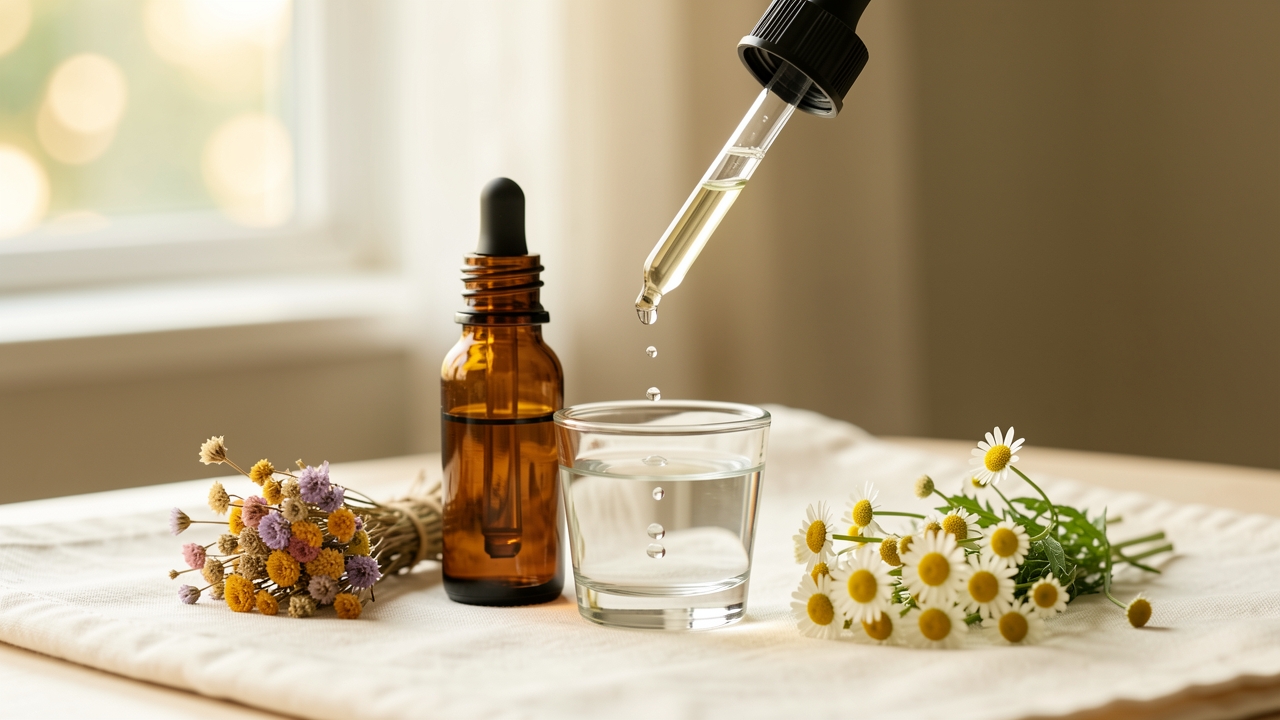
Preparing a personalised formula at my consultation: each bottle contains between 3 and 7 essences, chosen from what the client shares during the session.
How Bach Flower remedies combine with other therapies
One of the things I love most about this system is how well it blends with everything else. In my consultation it is common to combine Flowers with:
- Reiki: the energetic work of the Reiki session opens the emotional layer; the Flowers sustain that work during the weeks at home. It is one of the combinations I most recommend when there is a deep emotional process.
- Clinical aromatherapy: aromatherapy works the chemical dimension, Flowers work the vibrational dimension. Together they offer a very complete approach.
- Holistic massage: Flowers are not applied during the massage, but the manual work prepares the nervous system very well so that the Flowers act with more clarity in the following weeks.
- Conventional psychological support: Flowers do not replace psychotherapy when it is needed. But they complement it very well: what is worked in psychological session finds steadier support with the flower formula at home.
Important: Bach Flower remedies are fully compatible with any medication (including psychiatric), with homeopathy, with oncological treatments and with all manual and energetic therapies. No interaction risk.
Safety and frequent doubts
Bach Flower remedies have an exceptional safety profile — one of the best of any therapeutic intervention:
- No known medical contraindications
- No documented medication interactions
- Safe in pregnancy and breastfeeding (all 38 essences)
- Safe in infants and children (they actually work especially well here)
- Safe in pets (animals respond very clearly)
- Safe for people in recovery from alcohol addiction: although the base is brandy, the daily dose is minimal (a few drops in water); for sensitive cases the formula can be prepared with vegetable glycerine instead of brandy.
The system was deliberately designed by Bach to be safe, accessible and risk-free, at a time when many medications had very aggressive profiles. That same safety is what makes them ideal for starting to work emotionally when you’re not yet ready for anything deeper.
Frequently asked questions about Bach Flower remedies
How long do Bach Flower remedies take to work?
It depends on the case and the depth of the emotion. For one-off situations (a trip, an exam, with Rescue Remedy) the effect is almost immediate. For sustained emotional processes, the first subtle changes appear between week 1 and 2, and a clear shift usually settles between week 3 and 4. That’s why a bottle typically lasts about 4 weeks.
Can I choose them myself or do I need a consultation?
For specific crises (Rescue Remedy in a bad moment), self-prescription works well. For sustained emotional processes, a consultation with a trained therapist is highly recommended: correctly identifying underlying emotions, distinguishing between similar states (for example Pine vs Crab Apple, or Mimulus vs Aspen), and combining the essences well requires experience.
Do Bach Flower remedies contain alcohol? Can I take them if I don’t drink?
The traditional base is brandy (it acts as a preservative). The daily dose — 4 drops, 4 times — represents a minimal quantity of alcohol (literally a fraction of a millilitre per day), lower than that of many pharmacy syrups. Still, if you prefer it by conviction, allergy or because you don’t drink, I can prepare your formula with vegetable glycerine as an alternative base.
Do Bach Flowers help with weight loss or sleep?
Not directly — and be wary of anyone selling them with that promise. What they can do is work on the underlying emotion behind emotional eating, anxiety-driven insomnia, or procrastination with exercise. Flowers don’t treat the symptom, they treat the emotional root — and sometimes that resolves the symptom on its own.
Can I take Bach Flowers while in psychotherapy?
Yes, perfectly — and it’s an excellent combination. Flowers do not replace psychotherapy when it is needed. They sustain it between sessions, helping to integrate what is worked in psychological consultation.
How much does a Bach Flower consultation cost in Dubai?
At my studio a full Bach Flower consultation (60-90 minutes + personalised 30 ml formula) starts at AED 250. The follow-up at 4 weeks, with formula adjustment if needed, starts at AED 150. I work in English and Spanish, in my private studio in Arabian Ranches.
← Back to blog · Book a consultation · What is Reiki? · The 7 chakras · Clinical aromatherapy