Manual lymphatic drainage: benefits, technique and guide from a therapist in Dubai
Manual lymphatic drainage (MLD) is a very specific therapeutic massage technique that stimulates the lymphatic system through soft, rhythmic and directional pressures, helping the body to mobilise stagnant lymph, reduce inflammation and reactivate the immune system. Unlike conventional massage, it is not a muscular massage: it works on the superficial lymphatic vessels with a very light and specific pressure. In this guide, drawn from my daily practice as a holistic therapist in Dubai, I explain what it really helps with, what results you can expect, and how I work with it in my studio in Arabian Ranches.
The essentials of manual lymphatic drainage
Manual lymphatic drainage is a very gentle and technical massage that activates the lymphatic
system to mobilise stagnant lymph, reduce swelling and support immunity. It isn’t relaxing
because the massage feels pleasant — it is relaxing because the nervous system rebalances
when the body drains properly.
- What it is: a specific manual technique that stimulates lymph flow with very gentle pressure
- Reference method: Vodder method, developed in 1932 by Emil Vodder
- What it helps: post-partum, post-surgery, fluid retention, cellulite, immune support
- Length: 60 to 90 minutes per session
- Session in Dubai: from AED 350 at Rosana Holistic Studio (Arabian Ranches)
- Frequency: cycles of 5 to 10 consecutive sessions, then monthly maintenance
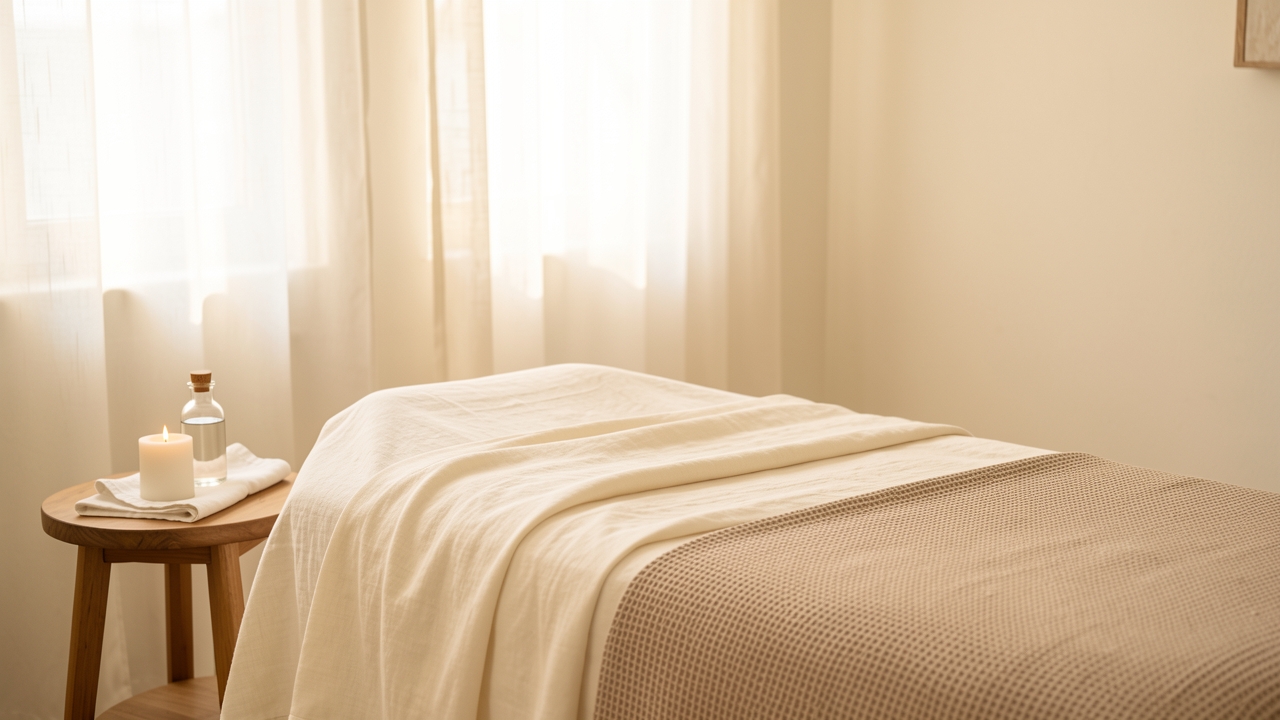
My treatment table prepared before a manual lymphatic drainage session: fresh linen sheet, neutral oils and soft lighting.
What exactly is manual lymphatic drainage?
Manual lymphatic drainage is a physiotherapeutic technique of medical origin, not a “gentler” variant of massage. The distinction matters because it defines what it is for — and what it isn’t.
It was developed in 1932 by Emil and Estrid Vodder, a Danish couple of physiotherapists, after years of clinical observation working with patients who suffered chronic infections, recurring rhinitis and immune problems. The Vodders noticed those patients had inflamed lymph nodes in the neck — and wondered what would happen if they manually worked on those nodes. The clinical result was so clear that the technique was systematised, and today the Vodder method is the international gold standard for manual lymphatic drainage.
The Vodder method is based on four very precise manoeuvres — stationary circles, pumps, rotaries and scoops — always performed with very light pressure (the natural weight of the skin over the lymphatic vessels) and following the anatomical direction of the lymphatic flow. Any pressure above 30-40 mmHg collapses the lymphatic vessels and stops the drainage — which is why a “strong” massage can never be lymphatic drainage.
What is the lymphatic system and why does it matter?
The lymphatic system is the body’s internal cleaning network. While blood carries oxygen and nutrients to the cells, the lymph collects everything left over: interstitial water, large proteins, cellular debris, viruses, bacteria, cancer cells. That lymph travels through vessels parallel to the veins, passes through filters (lymph nodes) where it is “cleaned”, and returns to the bloodstream for elimination.
Key features of the lymphatic system:
- It has no pump of its own (unlike the heart for the blood). It moves thanks to deep breathing, muscle movement, peristalsis and the pulsation of nearby arteries.
- When it stagnates, the body retains fluid, inflammation and toxins. That translates into swelling, heavy legs, cellulite, low defences, chronic tiredness, a puffy face on waking.
- A sedentary life, chronic stress, surgeries and pregnancies slow it down. In Dubai, the heat, dehydration and long hours in air-conditioned offices are factors I see daily.
Manual lymphatic drainage literally activates that cleaning network from the outside, helping the body do a job it was doing only halfway.
What is manual lymphatic drainage really for?
After a decade in Dubai, these are the cases where manual lymphatic drainage makes a clear difference:
Post-partum
One of the most requested uses at my studio. After birth the body has to eliminate the excess fluid accumulated during pregnancy, reabsorb tissue, regulate hormones. Lymphatic drainage accelerates all of that visibly:
- Reduces swelling in legs, feet and face
- Supports abdominal recovery (especially after C-section, once healed)
- Improves sleep quality and reduces accumulated tiredness
- Helps drainage of the pelvic area
Ideal start: between weeks 4 and 6 post-partum (after the medical check-up), with a cycle of 5-10 sessions.
Post-surgery
Lymphatic drainage is essential after aesthetic surgeries (liposuction, abdominoplasty, mammoplasty) and several types of medical surgeries (oncological ones with lymph node removal, vascular interventions). Without it:
- Post-operative inflammation lasts longer
- Risk of fibrosis (hardened internal scars) increases
- The final result of the surgery is worse
With a well-structured lymphatic drainage protocol, recovery accelerates significantly. I work with plastic and aesthetic surgeons in Dubai who refer their patients for structured post-operative protocols (10-15 sessions, depending on the case).
Fluid retention and heavy legs
One of the most common issues in women in Dubai:
- Office work + air conditioning + heels + intense heat
- Frequent long-haul flights
- Pregnancies and hormonal changes
- Menstruation
Lymphatic drainage mobilises stagnant interstitial fluid and produces very quick relief. Many clients feel the effects from the first session — lighter legs, less swollen ankles, better sleep.
Cellulite
Cellulite has a clear component of lymphatic stasis: when the lymph doesn’t drain well, adipocytes inflame, trap water and form the visible nodules. Lymphatic drainage doesn’t “eliminate” cellulite — that’s basic honesty — but visibly improves its appearance and works on the underlying cause when combined with lifestyle changes (hydration, movement, nutrition).
Immune support
This is what the Vodders discovered in 1932 and is still true: lymphatic drainage stimulates the production and circulation of lymphocytes, the immune system’s cells. Especially useful for:
- Recurrent colds
- Chronic sinusitis (facial drainage is particularly effective)
- Seasonal changes
- After long antibiotic treatments
Support during cancer processes
In oncology, lymphatic drainage is used as a strictly protocolised complementary therapy — never improvised — especially to prevent and treat secondary lymphoedema after surgeries involving lymph node removal (breast cancer, melanoma, gynaecological). It requires specific training and is always done in coordination with the oncology team.
Other cases where it works very well
- Fibromyalgia: through the inflammatory component
- Migraines and sinusitis: through the cervicofacial drainage
- Chronic stress and burnout: through the deeply parasympathetic effect
What is manual lymphatic drainage NOT for?
In honesty: there are situations where lymphatic drainage isn’t the indicated tool or is directly contraindicated:
- Acute infections with fever: the infection must be addressed first
- Active untreated cancer: requires prior medical evaluation
- Decompensated heart failure
- Active deep vein thrombosis
- Tuberculosis or uncontrolled hyperthyroidism
In all these cases, lymphatic drainage can wait — and my job is to refer you, and once the acute situation is resolved, resume the manual work when it’s safe.

My studio prepared for a manual lymphatic drainage session: every element — light, temperature, fresh linen sheet — is designed for the body to enter “drainage mode” from the first minute.
How I work lymphatic drainage at my studio
In my studio in Arabian Ranches I follow the classic Vodder method, adapted to each client. A typical session lasts 60 minutes for general protocols and 90 minutes for post-surgery or post-partum.
This is the flow:
- Initial conversation (10-15 min, no charge): I ask what you want to work on, review recent medical history, surgeries, pregnancies, medication, hormonal changes. Without this information lymphatic drainage cannot be personalised.
- Preparing the space and your body: I help you settle in comfortably, adjust the studio temperature (important: cold contracts lymphatic vessels), use very gentle aromatherapy if appropriate.
- Lymph node opening (neck and supraclavicular): we always start by emptying the “exit” nodes — the cervical ones — so the rest of the body has somewhere to drain to. Without this opening, draining the legs or the abdomen makes no sense.
- Systematic, directional drainage: I work the lymphatic chains rhythmically — axillary, abdominal, inguinal, popliteal — always in the correct anatomical direction and with the specific Vodder-method pressure.
- Specific drainage of the target area: if you come for post-partum, I work the abdomen and lower limbs longer. If you come for post-surgery, I work the operated area with the right precaution and direction. If you come for facial congestion, I work the neck and face.
- Closing with deep-breathing activation: diaphragmatic breathing is the natural “pump” of the lymphatic system. We close the session with a few guided breaths to fix the work.
- Home guidelines: hydration, food choices for the rest of the day, avoiding prolonged heat exposure. I explain everything in writing.
Book your first session here — new clients receive 10% off their first session.
How many lymphatic drainage sessions do you actually need?
One of the most frequent questions. My honest answer, based on what I see every week:
- Occasional fluid retention or heavy legs: cycle of 5 sessions spaced 5-7 days apart, then monthly maintenance.
- Post-partum: 5 to 10 sessions starting from week 4, spaced 5-7 days apart.
- Post-surgery (aesthetic): protocol of 10-15 sessions according to surgical indication, more frequently in the first 2 weeks (2-3 sessions/week) and reducing afterwards.
- Cellulite: cycles of 8-10 sessions combined with lifestyle changes.
- Immune support (recurrent colds, sinusitis): 3-5 sessions during the episode, and seasonal maintenance.
- General maintenance: 1 session per month.
A single session will give you a pleasant relief, but the deep effect comes with continuity. The lymphatic system takes several days to fully reorganise its flow after a well-done drainage session — that’s why we space the sessions initially and can relax the pace afterwards.
Differences between lymphatic drainage and other massages
A confusion I see constantly on social media and in Dubai spas:
- Conventional / relaxing massage: medium to firm pressure on muscles. Works on contractures, muscle tension, muscle fatigue. It doesn’t drain lymph.
- Sports massage: firm and specific pressure on muscles for athletes. It doesn’t drain lymph.
- Maderotherapy / vacuum therapy / electrostimulation: mechanical techniques that may have secondary draining effects, but they are not manual lymphatic drainage.
- “Lymphatic massage” in spas: in many places in Dubai — and around the world — “lymphatic massage” is offered with conventional pressure or an improvised technique. It isn’t manual lymphatic drainage and is often counterproductive.
Real manual lymphatic drainage is learned in long trainings (at least 6 months of practical training for the Vodder method) and is recognisable because:
- The pressure is very gentle — at the start it may seem the therapist “isn’t doing anything”
- The rhythm is slow and regular
- The manoeuvres are directional and specific
- It always starts at the neck and ends with conscious breathing
If the person treating you doesn’t follow that pattern, it isn’t real lymphatic drainage.
Frequently asked questions about manual lymphatic drainage
Does lymphatic drainage make you lose weight?
Not directly. It reduces swelling and fluid retention, which can visibly translate into losing some centimetres — especially in the abdomen, hips and thighs. But it isn’t a technique for losing fat. For sustainable changes in body composition, it needs to be combined with nutrition, movement and hydration.
When can I start lymphatic drainage after a C-section?
Usually between weeks 4 and 6, with your gynaecologist’s clearance. Before that, we only work on areas away from the scar (legs, arms, neck) if the case justifies it. Once healed, we can work the abdominal area gently — and the results are very noticeable.
Is it normal to feel a strong urge to urinate after the drainage?
Yes. It is one of the classic clinical signs that the session worked: the mobilised fluid enters circulation and is eliminated via the kidneys. That’s why I recommend urinating before the session, drinking water for the rest of the day, and not scheduling long meetings right after.
Can I combine it with Reiki or other therapies?
Yes, perfectly — and I often do. A combination that works very well is lymphatic drainage + closing Reiki: the system first enters physical “cleansing” mode and then energetic “rebalancing” mode. For some clients we also combine drainage with clinical aromatherapy (cypress, helichrysum, mastic are oils with decongestive effect).
Is it painful? Does it leave bruises?
Not at all. If it hurts or leaves bruises, it isn’t lymphatic drainage, it’s another technique. Real lymphatic drainage is so gentle that many clients fall asleep during the session.
How much does a lymphatic drainage session cost in Dubai?
In the Dubai market prices range between AED 300 and 800 per session. At Rosana Holistic Studio the 60-minute session starts at AED 350, with better package pricing for cycles of 5 or 10 sessions. I work in English and Spanish, in my private studio in Arabian Ranches.
← Back to blog · Book a session · What is Reiki? · The 7 chakras · Clinical aromatherapy