Facial lymphatic drainage: real benefits, technique and a therapist’s guide in Dubai
Facial lymphatic drainage is an extremely gentle manual technique that stimulates the lymphatic system of the neck, face and scalp to mobilise stagnant fluid, decongest tissues and activate skin regeneration. It isn’t a relaxing facial massage or a conventional beauty session: it is the same medical Vodder method applied to the facial area, with very visible results even from the first session — decongested face, more defined jawline, relieved sinusitis, more luminous skin. In Dubai, where heat, air conditioning, heavy creams and chronic dehydration continuously saturate the face, facial lymphatic drainage is one of the techniques with the best result-to-time ratio in my consultation. In this guide, drawn from my 10+ years practising manual lymphatic drainage, I explain exactly what it does, what results to expect, and how I do it in my Arabian Ranches studio.
The essentials of facial lymphatic drainage
Facial lymphatic drainage is a very gentle manual technique that activates the lymphatic system
of the neck, face and scalp. It reduces swelling, decongests sinusitis, improves skin radiance,
defines the facial oval and speeds recovery from aesthetic surgeries. Visible results from the
first session, sustainable with cycles of 5-10 sessions.
- What it is: specific Vodder manual technique for neck-face-scalp area
- What it helps: facial puffiness, sinusitis, post-aesthetic surgery, radiance, jawline definition
- Duration: 45-60 minutes
- Results: visible from the first session
- Recommended cycle: 5-10 sessions every 5-7 days + monthly maintenance
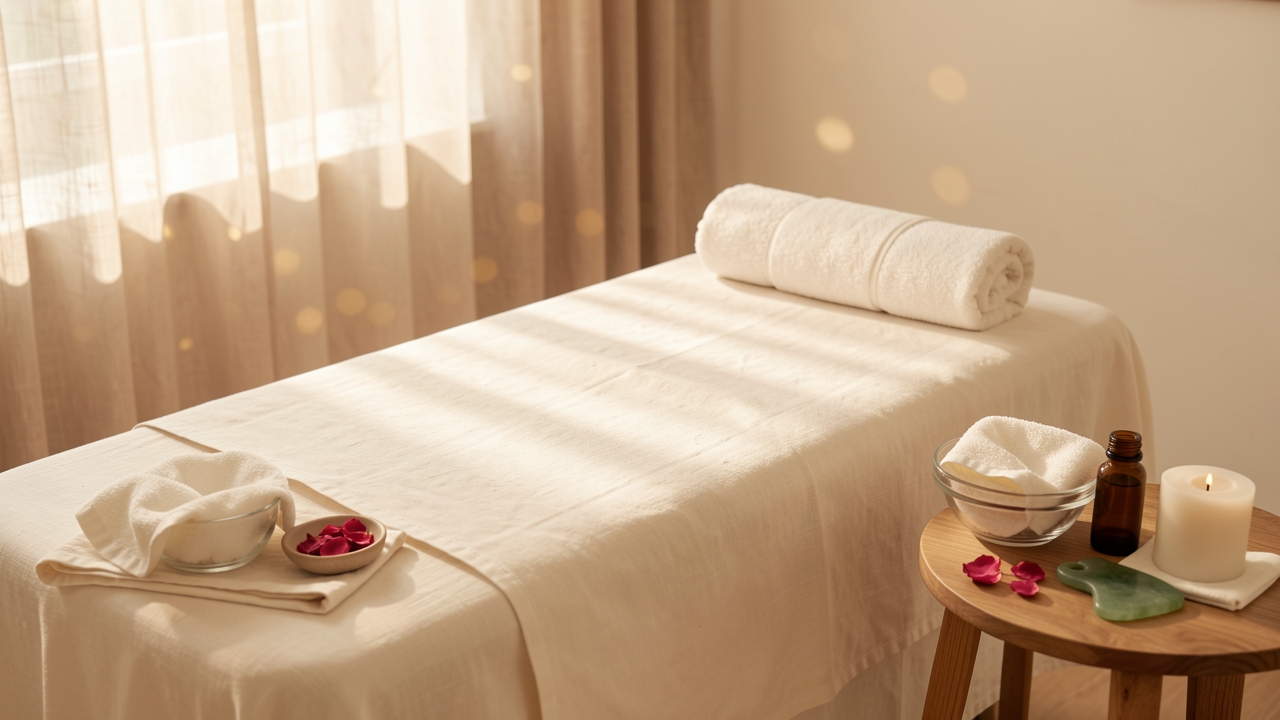
My treatment table prepared before a facial lymphatic drainage session: fresh linen sheet, gentle carrier oil, warm towels and soft light that invites the nervous system to let go.
What exactly is facial lymphatic drainage?
Facial lymphatic drainage is the application of the Vodder technique — the manual lymphatic drainage method developed in 1932 by the Danish physiotherapists Emil and Estrid Vodder — specifically to the neck, face, scalp and upper décolletage area. It’s important to understand this well: it isn’t a relaxing facial massage. The pressure is minimal (the weight of the skin over the superficial lymphatic vessels), the rhythm is very slow and the manoeuvres are directional, following the anatomical lymphatic flow of the face toward the cervical lymph nodes of the neck.
Any pressure above 30-40 mmHg collapses the superficial lymphatic vessels and stops the drainage. That’s why a true facial lymphatic drainage doesn’t stretch the skin, doesn’t redden it, doesn’t leave marks. If you leave a session with a red or irritated face, it wasn’t lymphatic drainage.
Why does the facial lymphatic system matter?
The face is crossed by a dense network of superficial lymphatic vessels that drain into the neck lymph nodes (parotid, submandibular, cervical). This network gets congested very easily by several factors that appear multiplied in Dubai:
- Chronic dehydration from the climate
- Constant air conditioning that dries
- Extreme heat that disrupts thermal balance
- Frequent flights (planes cause significant inflammation)
- Heavy facial creams that overload
- Sustained stress that tightens facial and neck musculature
- Insufficient and fragmented sleep
- Hormonal changes (menstrual cycle, perimenopause)
When this network gets congested, the result is puffy face on waking, dark circles, heavy eyelids, lost jawline, recurring sinusitis, dull skin. Facial lymphatic drainage mobilises that stasis and lets the face recover its natural shape.
How is it different from body lymphatic drainage?
Three key differences to understand:
| Aspect | Body drainage | Facial drainage |
|---|---|---|
| Duration | 60-90 minutes | 45-60 minutes |
| Pressure | Very gentle, sustained | Even gentler, minimal |
| Areas worked | Whole body, large lymphatic chains | Neck, face, scalp, upper décolletage |
| Main nodes | Axillary, inguinal, abdominal | Cervical, parotid, submandibular |
| Oils | Basic carrier oil | Fine, non-comedogenic oils |
| Visible result | General swelling reduction | Facial definition, immediate visible decongestion |
| Frequency | Every 5-7 days in cycle | Every 5-7 days in cycle |
Facial drainage can be done as a stand-alone session (45-60 min, ideal when you’re looking for specific aesthetic-therapeutic facial work) or integrated at the end of a full body session (the last 15-20 minutes), for a more global experience.
Real benefits of facial lymphatic drainage
These are the benefits I see consistently in consultation, in order of clarity of results:
1. Decongested face and reduced puffiness
The most visible and fastest benefit. The puffy face on waking, heavy eyelids, under-eye bags — all respond very well to facial drainage. Visible results during the session itself: clients look in the mirror at the end and clearly notice the difference.
2. More defined facial oval
By mobilising stagnant fluid in the jaw and neck, the oval redefines itself. it’s real energetic work or “lifting” — it’s simply that your face recovers its natural shape when it stops being congested. With sustained cycles, this result becomes stable.
3. More luminous skin and better colour
Lymphatic stasis slows cellular exchange. With drainage, the tissue is better oxygenated and the skin recovers radiance. Clients often report their skin “looks more alive” after a session — and others notice it too.
4. Sinusitis and nasal congestion
One of the lesser-known but clearer benefits. Facial lymphatic drainage works directly on the paranasal sinuses and the nasal mucosa, decongesting very effectively. In clients with recurring sinusitis, short cycles at each season change work very well.
5. Post-aesthetic-surgery recovery
Facial drainage is international standard in post-operative care for facial aesthetic surgeries: rhinoplasty, lifting, blepharoplasty, fillers, neuromodulators, peels. Reduces inflammation, prevents fibrosis and improves the final aesthetic result. I work regularly with aesthetic surgeons in Dubai on post-surgery protocols.
6. Tension headaches and migraines
The upper cervical lymphatic system is closely connected to tension migraines. Decongesting it regularly reduces frequency and intensity of these pains in clients with chronic headaches.
7. Improved bruxism and jaw tension
Gentle massage of the jaw area during drainage releases chronic muscle tension associated with bruxism, nighttime clenching and lower cervical tension.
8. Acne and reactive skin
In skin with inflammatory acne tendency, drainage reduces the inflammation that maintains the breakout cycle. Combined with appropriate dermatological care, it’s a very effective complement.
When facial drainage is NOT the first option
Basic honesty — there are situations where facial drainage isn’t indicated or is contraindicated:
- Active facial skin infections (active herpes, folliculitis, impetigo): the infection must be treated first
- Active oncological processes without approved medical protocol
- Very recent facial surgery without medical clearance (wait for surgeon’s green light)
- Active facial thrombophlebitis
- Fever or systemic infection
Once these situations are resolved, drainage can be resumed normally.
My step-by-step facial lymphatic drainage protocol
In my Arabian Ranches consultation, a facial drainage session lasts 45-60 minutes and follows this sequence:
1. Initial conversation (10 min, no charge)
Your recent medical history, whether there are recent aesthetic surgeries, pregnancy, menstrual cycle, active sinusitis, any skin allergies. Without this information it can’t be personalised.
2. Gentle facial cleansing
Surface cleansing with a gentle product to remove makeup, sunscreen and residue.
3. Cervical lymph node opening (key)
This is the most important phase and the one many techniques skip. Before draining the face, you have to empty the cervical lymph nodes of the neck: the “exit” where all the facial lymph will flow into. Without this opening, facial drainage has nowhere to go and results are much worse.
4. Systematic face drainage (Vodder)
Starting from the centre of the face and toward the lateral nodes:
– Forehead and brow area toward the temples
– Eyelids and orbital area very gently toward the parotid nodes
– Cheeks and cheekbones toward the parotid
– Nose and paranasal sinuses specific drainage
– Upper lip, buccal contour
– Jaw and chin toward the submandibular
– Neck toward the collarbone
Each manoeuvre following the client’s breathing rhythm. Clients often enter a deep meditative state during this phase.
5. Specific work on problem areas
If there’s acute sinusitis, I go deeper into the paranasal sinuses. If there’s jaw tension, I dedicate extra time. If there are dark circles and bags, focus on the orbital and parotid area. Each session adapts to what your face is asking for that day.
6. Cervical and scalp massage
Closing with scalp and posterior cervical area drainage — extends the benefits to the neck and unblocks tensions sustaining facial rigidity.
7. Final carrier oil application
Specific carrier oils according to your skin: jojoba (universal), sweet almond (for dry skin), rosehip (rejuvenating). Optional gentle essential oils depending on the case: lavender, helichrysum, cypress.
8. Rest and water
I leave you 5-10 minutes resting and offer water. After facial drainage you’ll feel the urge to urinate — completely normal, it’s the mobilised fluid being eliminated via the kidneys.
Book your first session here — new clients receive 10% off.
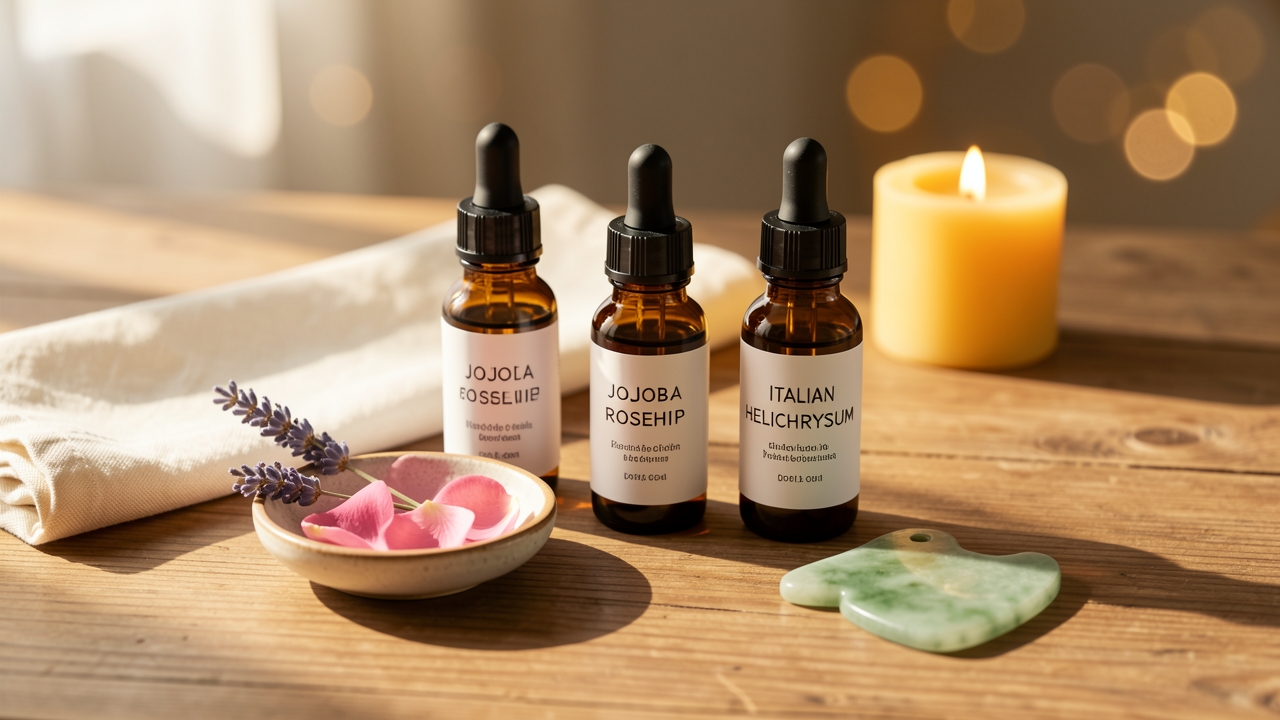
Some of the oils I use for facial drainage: jojoba as a universal carrier, rosehip for mature skin, Italian helichrysum as the star oil in post-aesthetic-surgery recovery.
How many facial drainage sessions do you need?
Depends on the goal:
- For looking better on a specific date (before an event, a wedding, a photo session): 1 session 24-48 hours before gives visible results
- To decongest acute sinusitis: 3 sessions in one week
- To sustainably improve radiance and the jawline: cycle of 6-10 sessions every 5-7 days, then monthly maintenance
- For post-aesthetic facial surgery: protocol personalised by surgical indication, generally 10-15 sessions starting 48-72h post-op (with surgeon’s clearance), more frequent in the first 2 weeks
- General maintenance: one session per month, ideal for women who travel often, spend hours in air conditioning, or feel their face “swells” easily
A one-off session will give you an immediate wow but passing effect. Sustainable results come with cycles.
Can I do facial lymphatic drainage at home?
Yes, partially — daily facial lymphatic self-massage is one of the most rewarding habits of holistic facial care. It complements a professional session, but it maintains results between sessions.
Basic self-massage (5 minutes in the morning)
- Usual facial cleansing, apply carrier oil or light serum so hands glide gently
- Lymph node opening: with flat fingers, 5-10 gentle pumps on the neck nodes, just below the ears and along the neck toward the collarbones
- Forehead: with flat fingertips, from the centre toward the temples, 5 very gentle passes
- Cheeks: with flat fingers, from the base of the nose toward the ears, 5 passes
- Jaw: from the chin toward the ears, following the jaw contour, 5 passes
- Neck closing: gentle pumps again on the cervical nodes
Golden rules:
– Very gentle pressure (the weight of a flower petal)
– Don’t stretch the skin
– Direction always downward (toward the neck), never upward
– Every morning, 5 minutes are enough
– Drink water afterwards
This daily practice + one professional drainage a month keeps most of my clients with a decongested and radiant face stably.
Differences from gua sha, common facial massage and other techniques
Four techniques that are constantly confused:
- Vodder facial lymphatic drainage: minimal pressure, lymphatic direction, therapeutic-aesthetic focus. Drains the lymphatic system literally.
- Gua sha: stone (jade, quartz) over oiled skin, medium pressure, also with lymphatic direction but with added tissue and vascular stimulation effect. Complementary, not exclusive.
- Common facial massage (“relaxing facial massage”): more generous pressure, focus on muscle relaxation and pleasure. Doesn’t drain lymph.
- Facial myofascial massage (FaceTaping, Buccal massage): deep work on facial musculature. Isn’t drainage, it’s muscle work.
All can be combined — but different effects, different indications.
Combinations that boost facial drainage
In my consultation, the combinations I most recommend:
- Facial drainage + clinical aromatherapy: oils with decongestive effect (cypress, Italian helichrysum, mastic) or radiance (rose, rose geranium). Integrated during the session and in serum for home.
- Facial drainage + 15-min closing Reiki: perfect combination for clients who also come for stress.
- Facial drainage + body drainage: in post-aesthetic facial surgery, alternate them in different sessions for optimal results.
- Facial drainage + gua sha at home: 5 minutes of gua sha at night + professional drainage every 1-2 weeks.
- Facial drainage + professional dermatological care: drainage complements skincare — it complements it. Creams, serums, acids and sun protection remain necessary.
Frequently asked questions about facial lymphatic drainage
Does facial lymphatic drainage replace Botox or fillers?
No, they are different things. Drainage mobilises stagnant fluid and improves circulation — it doesn’t fill volumes or paralyse muscles. It can be an excellent complement: many clients use it to enhance the result of aesthetic medical treatments, not to replace them.
How long do results last?
The immediate effect (decongested face, defined oval) lasts 48-72 hours without maintenance. With daily self-massage, it lasts a week or more. With sustained cycles + monthly maintenance, the result becomes stable — clients who have been doing it for months notice their baseline face is better.
Is it safe in pregnancy?
Yes, completely safe and in fact very useful — pregnancy causes frequent facial swelling. I only avoid essential oils contraindicated in pregnancy during the session.
Is it the same as the “lymphatic facial” at the spa?
Not necessarily. Many spas offer “lymphatic facials” that are actually facial massages with a vaguely lymphatic direction, not the real Vodder technique. The difference shows: real lymphatic drainage has minimal pressure (initially it can feel like the therapist is barely touching you), very slow rhythm, and visible immediate results. If you leave with a red or irritated face, it wasn’t drainage.
Can I do facial exercise after the session?
Not the same day. The lymphatic system is reorganising — let it work in peace. Next day no problem.
About my treatments at Arabian Ranches
If you’d like to go deeper into any of the topics covered in this article, at my Arabian Ranches studio I offer several treatments: Reiki with chakra balancing, therapeutic and aromatherapy massages, manual lymphatic drainage, Bach Flower therapy and personalised essential oil formulas, among others.
📋 See the full list and up-to-date pricing at Treatments.
✨ First visit: includes a free 15-minute initial consultation to understand your case and tailor the treatment. New clients also receive a 10% discount on their first treatment.
Book your session here or contact me if you have any prior questions.
← Back to blog · Book a session · Manual lymphatic drainage · Clinical aromatherapy · Essential oils for stress · Holistic vs traditional massage · Postpartum Reiki