Reiki for perimenopause and menopause: how to accompany the change (guide from a therapist in Dubai)
Perimenopause and menopause are one of the deepest and least understood processes in a woman’s life. It isn’t simply “the end of periods”: it is a profound reorganisation of body, hormones, nervous system, identity and sometimes even vocation. It can start in your 40s (sometimes earlier), last between 4 and 10 years, and touch all five energy bodies at once. The symptoms — hot flashes, insomnia, anxiety, brain fog, irritability, mood swings, joint pain, dryness — can be mild or can profoundly change quality of life. In my Dubai consultation I see many women in this stage, especially expats living the process far from their family and cultural reference. Reiki is one of the most effective and respectful tools to accompany this change: it doesn’t manipulate the hormonal system, doesn’t add chemical load, and works precisely where the perimenopausal body most needs it — nervous system, sleep, anxiety, emotional clarity. In this guide I explain exactly how Reiki helps, which symptoms improve most, how many sessions you need, and how I work this process in my studio.
The essentials of Reiki for perimenopause and menopause
Reiki accompanies perimenopause and menopause by regulating the nervous system exhausted by
hormonal changes: it reduces hot flashes and night sweats, improves sleep, calms anxiety, lifts
mood, and creates space to integrate this identity transition. It is compatible with hormone
replacement therapy and with any medication.
- What stage: perimenopause (40-55), menopause, early post-menopause
- Symptoms that most improve: insomnia, hot flashes, anxiety, irritability, brain fog
- Recommended frequency: cycle of 8 sessions every 7-10 days, then monthly maintenance
- Compatible with: HRT, antidepressants, phytotherapy, regular gynaecology
- Results: noticeable from the first session, sustainable after 5-8 sessions
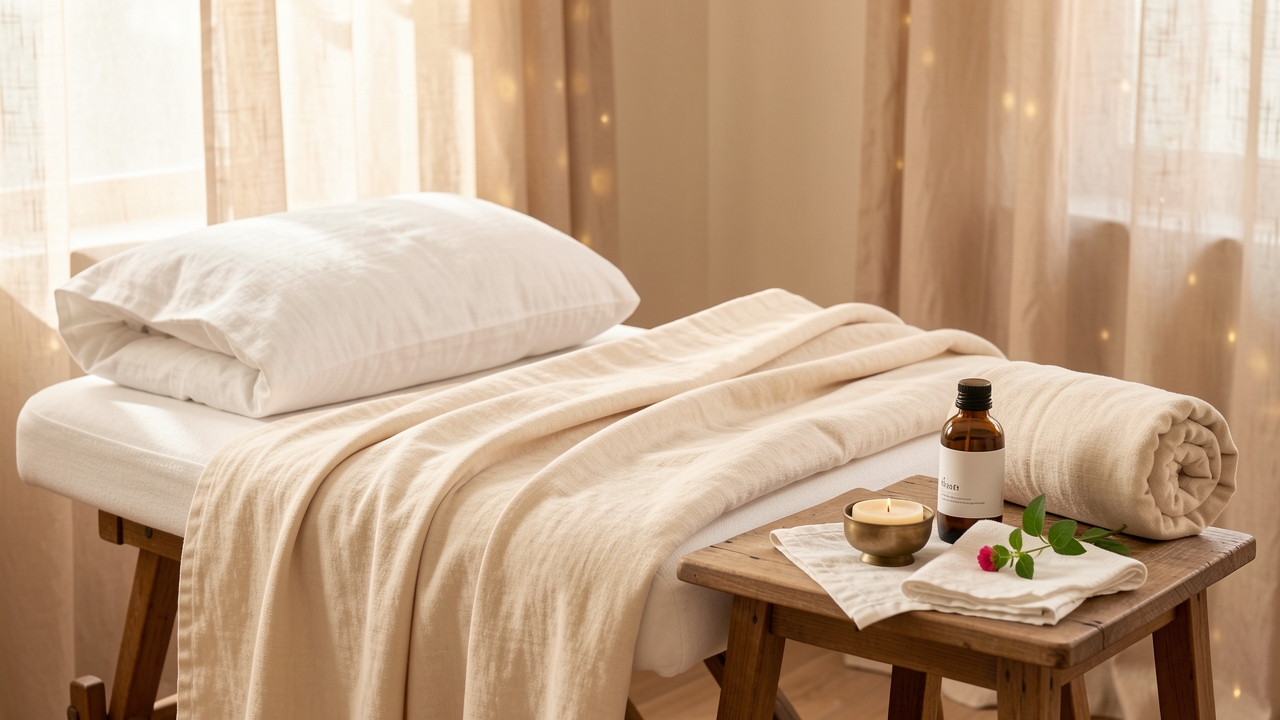
My treatment table prepared for a perimenopause Reiki session: soft cotton blanket, extra pillow under the knees, very low warm light, carefully adjusted temperature. Everything designed so your nervous system, exhausted by the changes, finds real rest.
What’s really happening in the body during perimenopause and menopause?
To understand why Reiki helps, it helps to understand what’s happening beneath the surface. Perimenopause is the transition period that precedes menopause (the last menstrual period), and can start 4-10 years before — usually between the ages of 40 and 50. During this stage, the ovaries begin to produce estrogens and progesterone irregularly: sharp rises and falls, short or long cycles, heavy or scant periods. It is this hormonal fluctuation, not the “absence of hormones”, that causes most of the more intense symptoms.
Official menopause is diagnosed when 12 months have passed without a period. From there, hormone levels stabilise at very low values, and many symptoms improve — although others (dryness, skin changes, bone health) require specific attention.
What’s happening in parallel is much more than hormonal:
- Nervous system: estrogen modulates serotonin, GABA and dopamine. When it drops, the nervous system becomes more reactive, anxious, irritable
- Thermoregulation: hot flashes are a hypothalamic dysregulation triggered by hormonal drop
- Sleep: progesterone facilitates deep sleep; when it drops, sleep becomes fragmented independently of stress
- Cognitive: “brain fog” has a real basis — estrogen protects cognitive function
- Emotional: mood swings that aren’t necessarily “psychological” but biochemical
- Identity: closing the reproductive cycle, life replanning, new relationship with the body
It’s a transformation that touches all 5 energy bodies at once. That’s why it needs integral care, not just medication when a symptom appears.
Why does Reiki help specifically in this stage?
Reiki doesn’t “regulate hormones” — that’s important to say clearly. What it does is work precisely on the consequences of hormonal dysregulation: the autonomic nervous system, cortisol, sleep, stress response. And that, in perimenopause, makes an enormous difference.
1. Calms the hypersensitive nervous system
With the drop in estrogen, the nervous system becomes more reactive: you cry more easily, get irritated by small things, have a “shorter fuse”. Reiki deeply activates the parasympathetic system, reducing this hyperreactivity from the physiological base. Clients describe feeling “more in control” after 2-3 sessions, without conscious effort.
2. Improves hot flashes and night sweats
Hot flashes are a discharge of the sympathetic nervous system: the body “gets scared” without real cause. Reiki, by deeply regulating the autonomic nervous system, reduces the frequency and intensity of hot flashes. It’s not an immediate effect like with medication, but it’s very clear after 4-6 sessions.
3. Restores deep sleep
Perimenopausal insomnia is especially cruel: you fall asleep but wake up at 3 or 4 am, often with a hot flash or palpitation, and don’t go back to sleep. Reiki regulates nighttime cortisol (which tends to be elevated in perimenopause) and improves sleep quality from the first session. Combines very well with my guide on Reiki for insomnia.
4. Reduces anxiety without medication
Many women discover anxiety for the first time in perimenopause. It’s not “that you’ve become anxious” — it’s biochemistry. Reiki is one of the most effective tools to accompany this anxiety, especially for women who prefer not to add medication. More details in my guide on .
5. Lifts low mood
The perimenopausal mood dip isn’t clinical depression in most cases — it’s a decrease in serotonin and dopamine linked to hormonal drop. Reiki helps stabilise this decline, and many clients report feeling “more optimistic” after a cycle of sessions.
6. Provides emotional space to integrate the change
Beyond physical symptoms, perimenopause brings a background question: who am I now? What do I want for the next 30 years? Reiki, by creating a safe space without pressure, lets these questions emerge and be processed without becoming an abrupt crisis.
7. Accompanies changes in sexuality
Dryness, changes in desire, rethinking sexuality — these are real and rarely discussed topics. Reiki doesn’t “solve” these changes, but creates internal space to live them without anxiety and often helps reconnect with the body from a new place.
My Reiki protocol for perimenopause and menopause
In my Arabian Ranches consultation, perimenopause Reiki sessions have a specific structure. It’s not the same as for generic anxiety or postpartum:
Initial conversation (15-20 min): how your cycle is currently, what symptoms you have and since when, your sleep, your energy, your emotional life, whether you’re on hormone therapy or medication, your family history (the age your mother had menopause guides me a lot). Without this information I can’t personalise.
Carefully prepared space: thermoregulation is altered — I adjust temperature accordingly, light blanket (that you can easily remove if you have a hot flash during the session), very warm low light.
Specific aromatherapy for perimenopause: rose geranium (hormonal balancer par excellence), clary sage (support in estrogenic changes), cypress (vascular balance) and frankincense (emotional integration). Gentle concentration.
Opening with Tibetan singing bowl: the sound lowers the nervous system from the first minute.
Chakra reading: in perimenopause, the most altered chakras appear to be the sacral (change in the feminine dimension), the solar plexus (personal power in transformation) and the heart (relational changes). I adapt the session to what the reading indicates.
Reiki session with specific focus:
- Head and cervical: for the autonomic nervous system
- Chest and solar plexus: to regulate the sympathetic system and hot flashes
- Lower abdomen and pelvic area: for energetic balance of the reproductive system in transition
Extra time on the chakras the reading indicated
Aura cleansing: especially useful because perimenopause often moves emotions repressed for years that need to come out.
Closing with Tibetan singing bowl + conscious breathing.
Rest (10 min) without rushing.
Guidelines for home: hydration, sleep, specific aromatherapy in a roll-on to take with you (rose geranium + lavender is my favourite formula for this stage), and sometimes a recommendation of Bach Flower remedies.
Book your first session here — new clients receive 10% off.
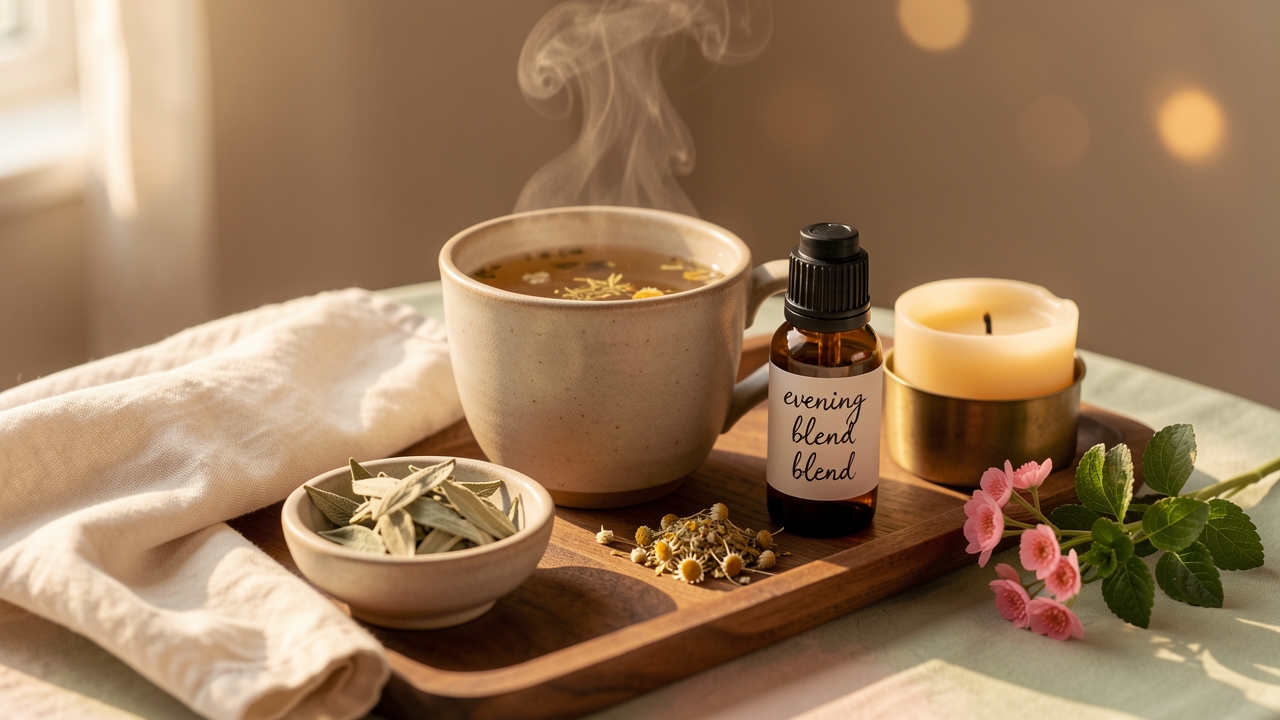
My recommended evening ritual for perimenopause: 30 minutes without screens, sage + chamomile infusion, rose geranium roll-on on wrists and soles of feet, and 4-7-8 breathing before sleep. Profoundly changes sleep quality.
How many sessions do you need?
My answer based on a decade of consultation:
- For mild to moderate symptoms (some hot flashes, regular sleep, stable mood): cycle of 5 sessions every 10 days, then monthly maintenance
- For intense symptoms (frequent hot flashes, severe insomnia, high anxiety, marked irritability): cycle of 8-10 sessions every 7 days, then maintenance every 3 weeks
- For integration of identity change (no strong physical symptoms but emotional/existential process): cycle of 6 sessions every 2 weeks, ideal combined with Bach Flower remedies and aura cleansing
- Post-menopause (quality of life maintenance): one session a month during the first year post-menopause, ideal for sustaining the body in its new configuration
Typical results I see in my clients:
- After the first session: night with deeper sleep, morning with more calm
- After 3-4 sessions: clear reduction in frequency/intensity of hot flashes, less emotional reactivity
- After 6-8 sessions: generalised sense of “having found firm ground”, established sleep, stabilised anxiety
- Monthly maintenance: sustainability of the change
Is Reiki compatible with hormone replacement therapy (HRT)?
Yes, completely compatible. Reiki doesn’t interact with any hormonal treatment — not systemic HRT, not contraceptives, not local progesterone, not vaginal estrogens. It’s one of the few complementary care options your gynaecologist will approve without hesitation.
In fact, many of my clients combine both with very good results: HRT regulates baseline hormonal levels, Reiki accompanies the nervous, emotional and energetic dimension that HRT doesn’t directly touch. It’s the combination I most recommend when symptoms are intense.
If you’re considering starting HRT, discussing it with your gynaecologist (not your holistic therapist) is the right thing — Reiki isn’t an alternative to HRT, it’s a complement. Each tool in its place.
The same applies to antidepressants (SSRIs much used in perimenopause), phytotherapy (black cohosh, soy isoflavones), vitamin D and calcium: Reiki is compatible with everything and enhances them, complements them.
The emotional and spiritual dimension of this stage
Beyond symptoms, perimenopause brings an identity transformation that few cultures know how to accompany. Leaving the reproductive cycle isn’t just a biological change — it’s a profound symbolic change that ancient traditions celebrated as entry into “the wisdom of the elder woman”.
In our current culture, this transformation is usually lived in silence, with shame, as something to hide or medicate. Many of my clients arrive at session carrying this silence for years.
What I see in consultation:
- Professional replanning: many women redefine their career at this stage
- Changes in relationships: partners that reconfigure or end, children who leave, friendships that change
- Replanning of life purpose: “what do I want for the next 30 years”
- Reconnection with the body from a new place: not as a fertility instrument, but as home
- Recovery of time and energy for oneself, often for the first time in decades
Reiki, especially combined with Bach Flower remedies (Walnut for changes, Wild Oat for the search for direction, Honeysuckle if there’s nostalgia for before), creates a sacred space for these questions without pressure, without “you have to decide” — just listening to what’s emerging.
Combinations that enhance the effect
The combinations I most use in perimenopause:
- Reiki + specific aromatherapy: rose geranium, clary sage, cypress, frankincense. Personalised roll-on for home.
- Reiki + Bach Flower remedies: specific formulas for integrating change.
- Reiki + aura cleansing: especially effective when there are repressed emotions that have been building for years.
- Reiki + holistic massage: for women also experiencing joint pain, muscle tension, or needing to reconnect physically.
- Reiki + lymphatic drainage: if there’s perimenopausal fluid retention, especially facial.
- Reiki + gynaecology + conscious nutrition: the most complete combination. Your gynaecologist manages the hormonal, a nutritionist the metabolic, Reiki the nervous-emotional-energetic.
Frequently asked questions about Reiki for perimenopause and menopause
When does perimenopause really start?
Usually between 40 and 47, although it can start earlier (early perimenopause) or later. The first sign is usually a change in the menstrual pattern (shorter cycles, longer, heavier, occasional absence) or the appearance of new symptoms (hot flashes, insomnia, anxiety) without identifiable cause. If in doubt, consult your gynaecologist.
How long does perimenopause last?
Between 4 and 10 years. The average is around 7 years. This means most women live perimenopausal symptoms throughout a decade. That’s why continued holistic care isn’t a luxury — it’s necessary to maintain quality of life.
Does Reiki have contraindications in perimenopause?
None specific. Reiki is completely safe in all stages of hormonal transition, compatible with any medication and any gynaecological treatment. The only “precaution” is that if you’re on intensive medication or have had recent surgery, tell me in the initial conversation to adapt.
Does Reiki work if I’m on hormone replacement therapy (HRT)?
Yes, and very well. HRT regulates baseline hormonal levels, but doesn’t resolve all symptoms — many women on HRT still have anxiety, insomnia, brain fog or mood swings. That’s where Reiki comes in: it accompanies the nervous-emotional-energetic dimension that HRT doesn’t touch.
Can I do Reiki if I have hot flashes during the session?
Yes, no problem. The table is prepared so you can easily remove the blanket if you have a hot flash. It’s completely normal and doesn’t interfere with the session — in fact, it’s usually a sign that the body is releasing sympathetic load.
About my treatments at Arabian Ranches
If you’d like to go deeper into any of the topics covered in this article, at my Arabian Ranches studio I offer several treatments: Reiki with chakra balancing, therapeutic and aromatherapy massages, manual lymphatic drainage, Bach Flower therapy and personalised essential oil formulas, among others.
📋 See the full list and up-to-date pricing at Treatments.
✨ First visit: includes a free 15-minute initial consultation to understand your case and tailor the treatment. New clients also receive a 10% discount on their first treatment.
Book your session here or contact me if you have any prior questions.
← Back to blog · Book a session · What is Reiki? · Reiki for insomnia · Essential oils for stress · Bach Flower remedies · Aura cleansing
How I do my Reiki sessions at the studio
Every session is unique because every person arrives with a different energetic state. Here’s how a session usually unfolds:
Opening with the Tibetan singing bowl. I start each session by sounding the Tibetan bowl. Its vibration opens the energetic space, calms the nervous system and prepares your body to receive.
Energetic reading with the pendulum. I review each of your chakras with the pendulum to perceive how they are — balanced, blocked or disordered. That reading guides me throughout the session.
Intuitive work. My practice is deeply intuitive: I let myself be guided by what I perceive. Sometimes I stay longer at a specific chakra because I sense there’s pending work there; other times the body asks me to move quickly.
Aura cleansing. After working with the chakras, I perform an energetic cleansing of your auric field. When I perceive blockages or alterations, I work to harmonise and seal the aura, restoring its natural integrity.
Closing with the Tibetan singing bowl. I finish by sounding the bowl again to close the energetic space and integrate the work done. What has moved during the session settles into your body and your energy.